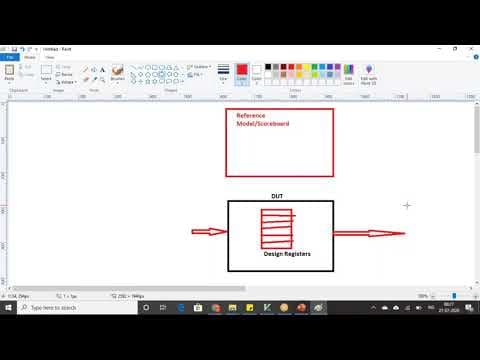
UVM Register model development is a 30-hour specialized course on UVM register model creation, integration, and test case development with real-world projects.
Next Batch
1-1 Dedicated Mentor Support
24/7 Tool Access
Multiple Mock Interviews
Industry Standard Projects
Support with Resume Update
UVM Register Model Development Overview
Course Overview
UVM Register model development is a 30 hours course focused on all the aspects of UVM register model development, integration, test case development and test debug.
Course covers multiple projects with complex register model implemented starting from listing down registers, fields, attributes, developing register model, integration in to the testbench and developing of register access testcases.
- Register model basics
- Need for register model?
- Steps in register model development
- Register model base classes
- Register value variables
- value
- Mirrored value
- Desired value
- Reset value
- DUT value
- Register model methods
- Front door access
- Configure
- Write
- Read
- Update
- Mirror
- Back door access
- Peek
- Poke
- Register model
- Developing register model
- Register model integration in to TB
- Register model TB updates
- Adapter
- Sequencer mapping
- predictor
- UVM built in sequences
- uvm_reg_access_seq
- uvm_mem_access_seq
- uvm_reg_mem_shared_access_seq
- uvm_mem_walk_seq


Key Features

Who All Can Attend This UVM Register Model Development?
This UVM Register Model Development course is ideal for candidates upskill themselves and entry-level professionals seeking to build a strong foundation in hardware verification using UVMPre-requisites To Take UVM Register Model Development
- Good understanding of UVM of digital logic design concepts.
- Familiarity with at least one Hardware Description Language (HDL) like Verilog or VHDL.
- A foundational grasp of object-oriented programming (OOP) principles.
High Demand for UVM Register Model Development
Know about the Growing VLSI industry
Responsible for developing verification environments, writing testbenches, creating UVM register models, and performing functional verification of complex digital designs.
According to Naukri and Glassdoor data, over 60% of VLSI design companies actively seek Verification Engineers with UVM register model experience due to the growing complexity of chip designs.
₹5 LPA
₹8 LPA
₹15 LPA
₹20 LPA
₹30+ LPA


Mode of Training
Next Batch
1-1 Dedicated Mentor Support
24/7 Tool Access
Multiple Mock Interviews
Industry Standard Projects
Support with Resume Update

- Learn in real-time with instructor-led sessions
- Flexible access from anywhere
- Recorded sessions available for revision
- Training on industry-standard tools
- Get certification after completion

- Self-paced learning as per your flexibility
- Industry-aligned learning modules
- Certification after course completion
- Access to structured video lessons and materials
- Track your progress step by step
- Access to learning materials for more than 1.5 years
Enrolling in the UVM Register Model Development course empowers verification engineers to build robust and reusable register models, a critical component in complex testbenches. This course provides hands-on experience with real-world projects, enabling learners to define, integrate, and validate register models efficiently. It strengthens debugging and automation skills, enhancing productivity in verification workflows. With increasing industry demand for UVM expertise, this course helps professionals stay competitive and job-ready. Whether you're upskilling or transitioning into advanced verification roles, this course offers the practical edge needed for success.

Career Path
Learning Path


At VLSIGuru, we believe that education should lead to meaningful employment. Our training programs are designed not just to impart technical excellence, but also to bridge the gap between academic learning and industry demands. With a strong network of hiring partners and a proven track record, we ensure that our students are career-ready.
Placement Highlights

- Industry-aligned curriculum
- Hands-on projects and case studies
- Communication skills
- Resume building and interview preparation
- Technical and HR mock sessions
- Aptitude and domain-specific test series
- Regular drives and exclusive hiring events with partner companies
- Resume building and interview preparation

At VLSIGURU, we provide industry-focused VLSI training and guidance that helps students and professionals build strong technical skills and succeed in their careers. Our programs are designed to be practical, flexible, and aligned with current industry requirements.


Student Reviews





Frequently Asked Questions
- Course presentations for all topics
- Session notes
- Lab documents with detailed steps
- User guides
No prerequisites. Good to know C language & exposure to Digital Design concepts.
- Each aspect of course is supported by lot of practical examples
- Dedicated full day lab sessions to ensure student does complete testbench development from scratch
- Yes, You will have option to view the recorded videos of course for the sessions missed
- You will have option to repeat the course any time in next 1 year
- Yes, Course fee also includes support for doubt clarification sessions even after course completion
- You have option to mail you queries
- Option to meet in person to clarify doubts
You'll receive 30 hours of focused and structured training, designed to provide in-depth knowledge on UVM register model development. This intensive learning experience covers both theory and practical implementation thoroughly.
Yes, the course is highly practical and project-driven, ensuring you gain hands-on experience through every concept. You'll actively work on real-time coding exercises and industrial-level register model integration tasks.
You'll work on multiple projects involving SPI and Ethernet MAC register models. These projects replicate real industry scenarios, helping you build testbenches, implement register access, and debug tests just like in a VLSI job.
After completing this course, you can apply for roles like UVM Verification Engineer, Junior Design Verification Engineer, or SoC Verification Specialist. These roles are in high demand across the VLSI and semiconductor industry.
Absolutely! UVM register modeling is a core skill in functional verification and is widely used in VLSI companies. Professionals skilled in this domain are highly sought after due to the complexity and importance of register testing.
Yes, this course is designed to bridge the gap between academic knowledge and industry needs. You'll gain the essential practical skills that employers look for, especially in verification and SoC-level testing roles.
You’ll develop skills in register abstraction layer (RAL) creation, front/back door access methods, and integrating register models into UVM testbenches. You'll also learn to debug complex register test failures efficiently.
Yes, the course provides in-depth training on front-door and back-door register access using built-in and custom sequences. You'll practice using these methods in real-time test scenarios to validate register functionality.
Each register model is taught step-by-step, starting from listing registers and fields to complete integration. This structured approach helps simplify complex concepts, making them easier to understand and implement.
Yes, you'll gain expertise in seamlessly integrating register models into SystemVerilog UVM testbenches, including mapping sequencers, adapters, and configuring predictors—crucial skills for real-world verification environments.
VLSIGURU is known for its industry-aligned training, expert mentors, and a strong emphasis on practical implementation. The course structure ensures you're job-ready with skills that align with actual industry projects.
Our trainers are industry professionals with 10+ years of experience in VLSI functional verification. They bring real-world knowledge, best practices, and project insights that go far beyond textbook concepts.
We follow a hands-on, interactive learning methodology with coding sessions, real-time debugging exercises, and continuous mentor support. The training is structured to ensure concept clarity and practical skill development.
Freshers with UVM register model expertise can expect a starting salary between ₹4.5 LPA and ₹8 LPA, depending on skill level and company. This course boosts your employability and compensation potential in core VLSI roles.
UVM register model development is a high-value skill in the VLSI job market. As you gain experience, your career growth and salary progression accelerate due to the specialized nature of the work.
Yes, the VLSI industry is booming with innovation and investment, especially in India. With increasing demand for chips and electronics, VLSI verification professionals have excellent long-term career opportunities.

© 2025 - VLSI Guru. All rights reserved
Explore a wide range of VLSI and Embedded Systems courses to get industry-ready.
50+ industry oriented courses offered.

Explore a wide range of VLSI and Embedded Systems courses to get industry-ready.
50+ industry oriented courses offered.