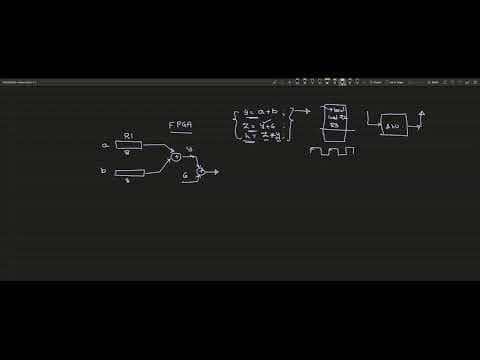
FPGA System Design training is a 6 months course provides participants with wider and deep understanding of the FPGA Architecture, Design, Timing closure flow and debugging.
Next Batch
1-1 Dedicated Mentor Support
24/7 Tool Access
Multiple Mock Interviews
Industry Standard Projects
Support with Resume Update
FPGA System Design Training Overview
Course Overview
FPGA System Design training is a 6 months course provides participants with wider and deep understanding of the FPGA Architecture, Design, Timing closure flow and debugging.
FPGA System Design course is for both Design and verification engineers who want to gain expertise and hands on exposure to FPGA design, prototyping and Validation. FPGA training focuses on the subtleties of the Vivado flow and its add-on tools. By mastering the design methodologies presented in FPGA System Design course, participants will be able to close the timing of their designs faster, and also shorten the development time, and lower development costs.
Course combines insightful lectures with practical lab exercises to reinforce key concepts. FPGA training will also help experienced engineers working in other domains, planning to switch in to FPGA domain. Course provides multiple hands on project exposure to provide hands on exposure to the complete FPGA system design flow.
Course has been framed with a seamless interest to plug and play the FPGA boards. Every session is planned with good hands-on examples to enable quicker understanding. Lab sessions are planned at regular intervals. Traditional FPGA developers code in languages such as Verilog HDL and VHDL. These developers are comfortable with creating FPGAs using the software, closing timing on complicated hardware circuits and managing complicated I/O interfaces to the FPGA. Below is the quick review of the course.
FPGA Architecture
FPGA internals and I/0
FPGA timing closure
FPGA implementation by RTL mode as well as IP Mode
FPGA debugging
Software development kit environment
Booting FPGA in petalinux/ubuntu
Questasim, Vivado, Zed board


Key Features

Who All Can Attend This FPGA System Design Training?
This training is ideal for professionals aiming to gain practical knowledge in designing, implementing, and debugging digital systems using FPGAs. It is suitable for both entry-level and experienced engineers working in embedded systems, hardware design, or VLSI domains.Pre-requisites To Take FPGA System Design Training
- Expertise to C programming
- Exposure to Digital design basics

High Demand for FPGA System Design Training
Know about the Growing VLSI industry
FPGA Design Engineers are in high demand in industries like telecom, aerospace, and automotive. Salaries increase with experience in RTL design, IP integration, and proficiency in tools like Vivado or Quartus. Bangalore and Hyderabad offer the highest compensation due to strong semiconductor ecosystems.
₹12 LPA
₹15 LPA
₹18 LPA
₹20 LPA


Mode of Training
Next Batch
1-1 Dedicated Mentor Support
24/7 Tool Access
Multiple Mock Interviews
Industry Standard Projects
Support with Resume Update

- Learn in real-time with instructor-led sessions
- Flexible access from anywhere
- Recorded sessions available for revision
- Training on industry-standard tools
- Get certification after completion

- Self-paced learning as per your flexibility
- Industry-aligned learning modules
- Certification after course completion
- Access to structured video lessons and materials
- Track your progress step by step
- Access to learning materials for more than 1.5 years
FPGA System Design training is crucial for design and verification engineers aiming for expertise in FPGA architecture, design, timing closure, and debugging. It provides hands-on experience with FPGA design, prototyping, and validation, particularly focusing on the Vivado flow. Mastering this training enables faster timing closure, reduced development time, and lower costs. It also aids experienced engineers transitioning to the FPGA domain.

Career Path
Learning Path


At VLSIGuru, we believe that education should lead to meaningful employment. Our training programs are designed not just to impart technical excellence, but also to bridge the gap between academic learning and industry demands. With a strong network of hiring partners and a proven track record, we ensure that our students are career-ready.
Placement Highlights

Projects
After completing this training, you will know how to:
- Utilisation of the primary 7 series FPGA architecture resources
- Project Manager to start a new project
- Identify the available Vivado IDE design flows (project based and non-project batch)
- Identify file sets (HDL, XDC, simulation)
- Analyse designs by using the cross-selection capabilities, Schematic viewer, and Hierarchical viewer.
- Synthesize and implement an HDL design
- Utilise the available synthesis and implementation reports to analyse a design (utilisation, timing, power, etc.)
- Build custom IP with the IP Library utility
- Make basic timing constraints
- Describe and analyse common STA reports
- Identify synchronous design techniques
- Describe how an FPGA is configured
- Industry-aligned curriculum
- Hands-on projects and case studies
- Communication skills
- Resume building and interview preparation
- Technical and HR mock sessions
- Aptitude and domain-specific test series
- Regular drives and exclusive hiring events with partner companies
- Resume building and interview preparation

At VLSIGURU, we provide industry-focused VLSI training and guidance that helps students and professionals build strong technical skills and succeed in their careers. Our programs are designed to be practical, flexible, and aligned with current industry requirements.


Student Reviews





Frequently Asked Questions
- Course presentations for all topics
- Session notes
- Lab documents with detailed steps
- User guides
- Each aspect of course is supported by a lot of hands on exercises and lab.
- FPGA timing as well as prototyping.
- FPGA validation and debugging.
- Dedicated lab sessions with the tool as well as the hardware boards.
- Expertise to C programming
- Exposure to Digital design basics
Course content covered in college (Btech/Mtech) curriculum is mostly theoretical and does not cover practical aspects. This course helps address that gap.
Each session of course is recorded, missed session videos will be shared
- Yes, You will have option to view the recorded videos of course for the sessions missed
- You will have option to repeat the course any time in next 1 year
- Student can continue to work from institute till he/she gets job
- Student has option to repeat the course as required
- Option to meet trainer in person to clarify doubts
FPGAs are reconfigurable integrated circuits that allow hardware customization after manufacturing. They are crucial for high-performance, flexible computing in various industries like telecommunications, aerospace, and embedded systems, offering speed and adaptability.
Career paths include FPGA Design Engineer, Verification Engineer, Embedded System Engineer with FPGA focus, FPGA Architect, Technical Lead, and specialized roles in areas like high-speed interfaces or DSP.
Yes, VLSI Guru offers online courses that cover FPGA fundamentals and design. However, VLSI Guru's training likely provides a more comprehensive, industry-focused curriculum with hands-on labs and placement support tailored to the Indian job market.
Online courses offer flexibility, allowing you to learn at your own pace. However, VLSI Guru's in-person or potentially hybrid model might offer better hands-on lab experience with dedicated hardware and stronger instructor interaction, along with placement support relevant to India.
Related topics include digital logic design, computer architecture, hardware description languages (Verilog/VHDL), embedded systems, digital signal processing (DSP), communication protocols, and hardware verification methodologies. VLSI Guru's curriculum likely covers many of these.
Courses that offer a comprehensive curriculum covering design, verification, and implementation, along with practical hands-on experience with industry-standard tools and real-world projects, are best for workforce training. VLSI Guru's 7.5-month program with tool access and project-based learning seems well-suited for this.
If you enjoy problem-solving, have an interest in computer hardware and digital logic, and are looking for a challenging and in-demand field within electronics and embedded systems, then learning FPGA could be a good fit.
Basic understanding of digital electronics and logic gates is beneficial. Exposure to a hardware description language (like Verilog or VHDL) and some C programming knowledge can also be helpful, as indicated in VLSI Guru's prerequisites.
Common paths include starting as a Design or Verification Engineer, progressing to roles in implementation, embedded systems integration, architecture, and eventually leadership or specialized technical positions.
Individuals who are detail-oriented, possess strong analytical and problem-solving skills, enjoy working with hardware and software, and are continuous learners thrive in FPGA roles due to the technology's complexity and rapid evolution.
Yes, a Field-Programmable Gate Array (FPGA) is a type of integrated circuit and therefore definitely falls under the umbrella of Very-Large-Scale Integration (VLSI). VLSI is the process of creating these complex integrated circuits.
After completing an FPGA course from VLSIGuru, you can pursue roles such as FPGA Design Engineer, Verification Engineer, Embedded Systems Engineer (with FPGA focus), and Hardware Engineer working with programmable logic. Your specific job prospects will also depend on your prior experience and the depth of the course.

© 2025 - VLSI Guru. All rights reserved
Explore a wide range of VLSI and Embedded Systems courses to get industry-ready.
50+ industry oriented courses offered.

Explore a wide range of VLSI and Embedded Systems courses to get industry-ready.
50+ industry oriented courses offered.